
Introduction

The information presented in this book is speculative in nature and is not intended to be taken as established historical or theological fact. The theories and interpretations explored here are drawn from ancient Hebrew and biblical texts, including canonical scripture, apocryphal and pseudepigraphal writings, and the Dead Sea Scrolls, as well as ancient Greek literature and other historical texts from cultures around the world that share remarkably similar stories and traditions. Where these sources converge, I have attempted to explore what those connections might suggest, while acknowledging that much remains open to debate and interpretation. Readers are encouraged to approach this material with an open and discerning mind, and to conduct their own research into the primary sources referenced throughout.
In the mists of antiquity, amidst the cradles of early human civilization, a pantheon of gods and goddesses emerged, shaping the beliefs, values, and experiences of our ancestors. From the thunderous halls of Mount Olympus to the sacred temples of the Nile, these deities have captivated the human imagination for millennia, inspiring art, literature, and the very foundations of our spiritual and cultural heritage.

But were these ancient gods merely figments of our ancestors' collective imagination, or did they represent something more tangible, a manifestation of natural forces, or even sentient beings that walked among us? What does the Hebrew Biblical text and Jewish tradition say about these gods? This is the central question that lies at the heart of this exploration into the mysteries of the divine. I’m
Through a journey spanning diverse cultures and belief systems, I look at the origins, attributes, and legacies of these revered supernatural entities. From the thunderous Zeus to Isis, Odin to Ganesha, from the enigmatic Watchers and the council of gods to the Titans, we will uncover the rich tapestry of legends and narratives that have woven their way into the fabric of human civilization.
But my quest does not stop there. I will also examine the ongoing scholarly debates and modern interpretations surrounding the possible reality of these ancient gods. Were they merely symbolic representations of universal archetypes, or could there be a kernel of truth behind the legends, evidence of advanced extraterrestrial civilizations, or even the remnants of a more spiritually attuned and technologically sophisticated human past?
As we navigate this captivating landscape, I invite you to approach this topic with an open and curious mind. Prepare to be transported to realms of wonder, challenged by thought-provoking theories, and inspired to seek the deeper truths that may lie hidden within the pantheons of our ancestors. For in unraveling the mysteries of the gods, we may just find a reflection of our own human experience, our quest for meaning, and our enduring desire to understand our place in the grand tapestry of the cosmos.
In this book I am attempting to weave together elements from various mythological and theological traditions to construct a coherent, overarching cosmology. Events that may or may not have happened in this order.
The idea of a council or pantheon of gods, with Yahweh as the highest deity, having dominion over the Earth and even a primordial garden like Eden, is certainly a compelling concept. This would align with certain ancient Near Eastern beliefs about the divine realm and its relationship to the physical world.
The notion that this council or "divine assembly" may have been responsible for creating, and then subsequently destroying, an earlier iteration of the world also resonates with themes found in Mesopotamian and Canaanite mythologies. The idea of primal chaos that precedes an ordered creation is a common motif.
Hebrew texts tell us there was a war, and I suggest that Yahweh after a chaotic period, establishes the Garden of Eden, populating it with Adam, Eve, and potentially other beings, further developing a thought framework. The temptation and expulsion of the first humans by a jealous council members (perhaps akin to the Akkadian/Canaanite figure of Mot or Yamm) would be a dramatic climax to this cosmological narrative.
This synthesis brings together diverse strands of ancient near eastern religion and mythology in an intriguing way. It speaks to the tapestry of belief systems that likely informed the worldview of figures like Nimrod and the ancient Israelites, even as they grappled with competing theological perspectives.
Of course, verifying the historical accuracy of such a comprehensive framework requires extensive research and analysis of primary sources. But as a conceptual framework for exploring the deep connections and tensions between the ancient pagan pantheons and the monotheistic Yahwistic tradition, I hope this interpretation is thought-provoking.
I have questions about the emergence of human civilization and settlements in the aftermath of the banishment from paradise.
When I consider the biblical narrative in conjunction with this proposed cosmological framework, it does seem plausible that there may have been other beings or populations that were also forbidden from accessing the divine realm of the Garden of Eden, even before the fall of the first humans.
The rapid development of cities, cultures, and technologies following Adam and Eve's exile suggests that there were likely pre-existing human (or human-like) populations that were living outside of Eden. These could have been communities that were intentionally barred from the garden, or perhaps groups that had never been granted access in the first place.
I find the 200 "Watchers" landing on Mount Hermon particularly intriguing. This echoes themes from the pseudepigraphal Book of Enoch, which describes a group of fallen angels who descended to Earth, intermingling with human women and imparting forbidden knowledge.
Considering this legend in the context of my proposed timeline, it's possible that these Watchers represented another wave of divine or supernatural entities being cut off from the heavenly realm, much like Adam and Eve. Their arrival on Mount Hermon, which I suggest was once the gateway to paradise, further reinforces the idea of a cosmic rupture and the proliferation of human civilizations in the wake of these exile narratives.
This all speaks to the profound theological and cosmological shifts that may have occurred, as the ordered, divine realm of Eden gave way to the messy, chaotic emergence of mortal societies and cultures. The loss of direct access to the sacred sphere could have catalyzed a flurry of human innovation, exploration, and the establishment of new social and political structures.
I find the synthesis of these themes really quite compelling. It points to the complexity of the ancient Near Eastern mythological landscape, where competing narratives and belief systems converged and collided.
For what it’s worth, I am not saying this timeline is factual. I believe there are lots of historical texts connecting dots but we may never truly know the whole story.
Timeline:
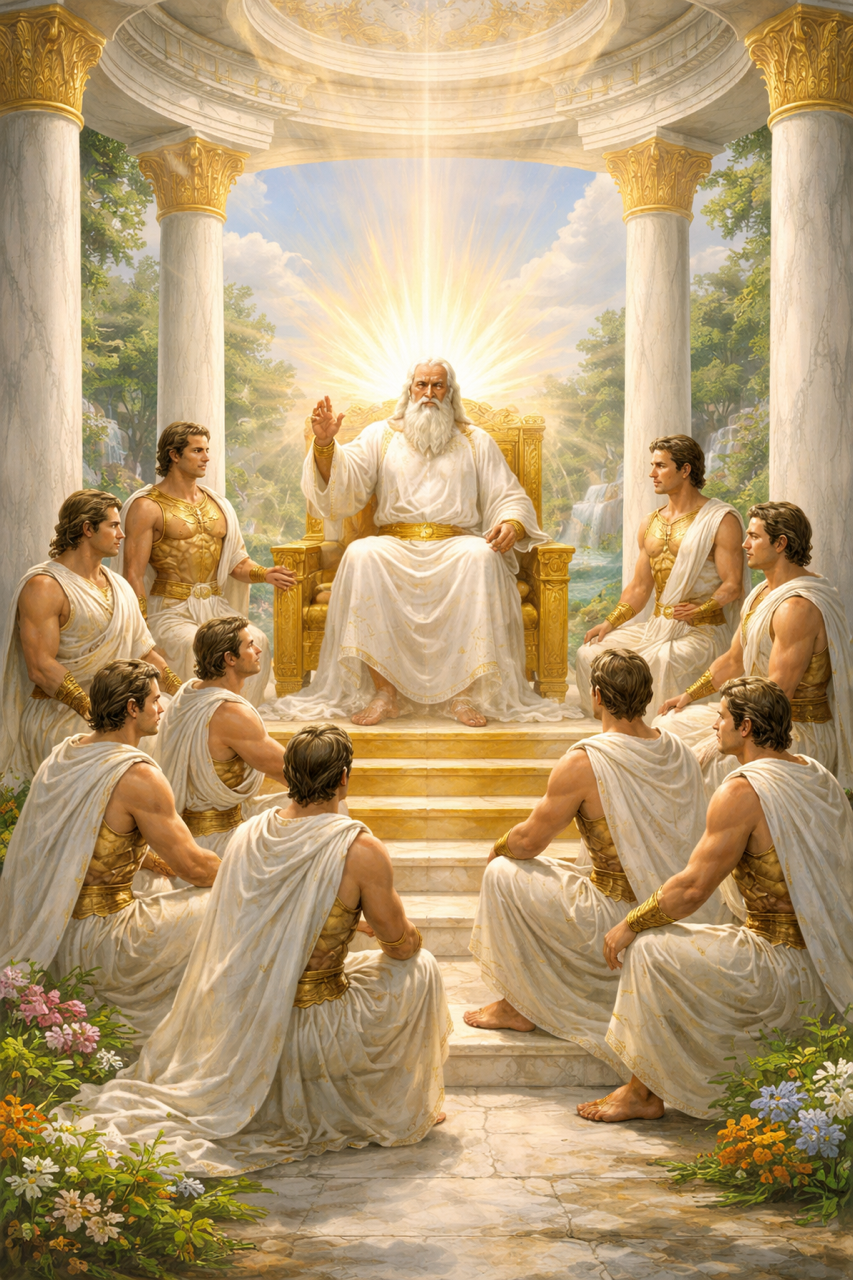
1. Ancient Council of Gods/Watchers: At the beginning, there exists a divine assembly of gods or Watchers, who engage in the creative work of shaping the earth. This council includes both benevolent and malevolent entities.
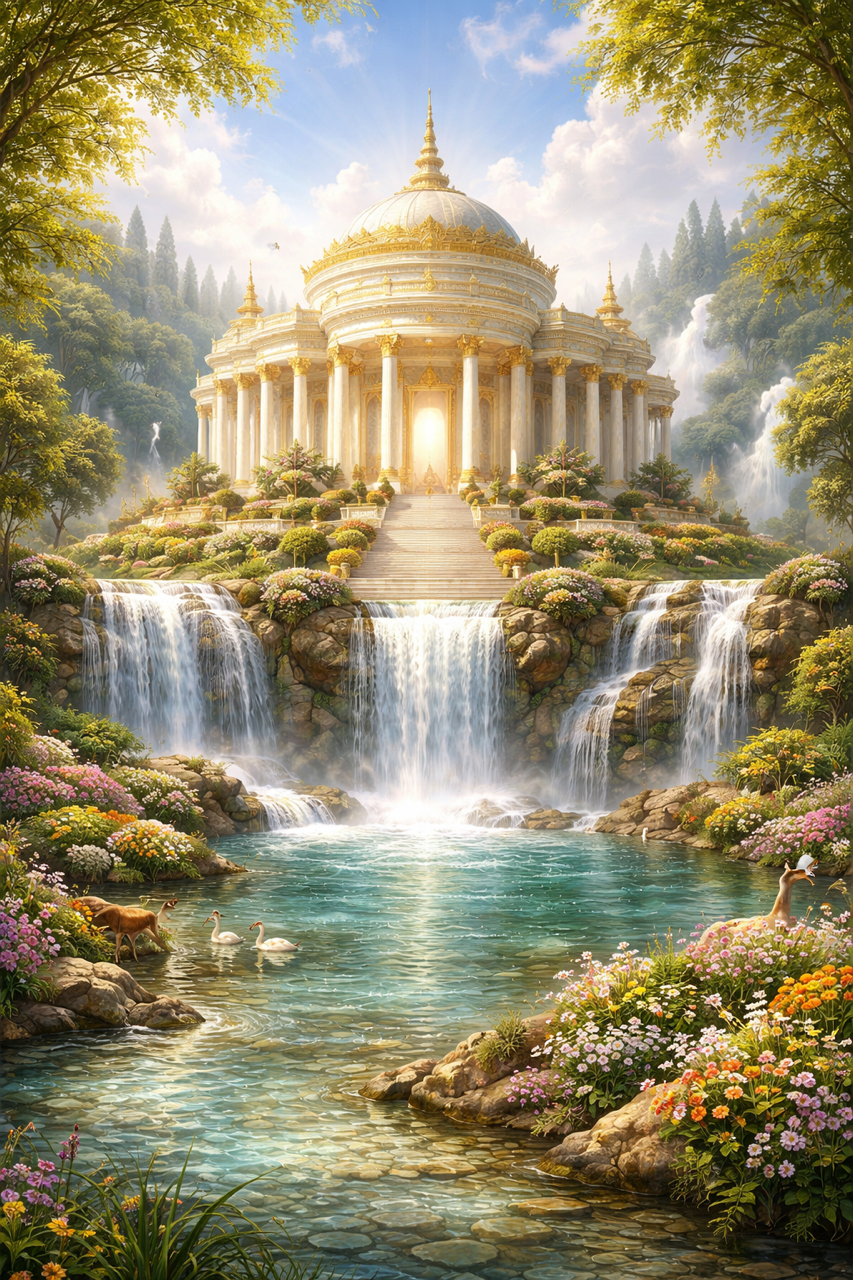
2. New Eden as a Sanctuary for the Divine: The Garden of Eden serves as a paradise where Yahweh dwells with the council of gods/Watchers and other beings. This area is seen as a sacred, untouched realm, perhaps also housing other created beings beyond Adam and Eve.
3. Creation of Adam and Eve: Yahweh creates Adam and Eve, intending for them to inhabit the garden and establish a relationship with Him. Their creation signifies a new phase in divine governance over the earth to replenish and renew what had been destroyed.
4. Conflict and Jealousy: Some members of the council of gods/Watchers are jealous of Adam and Eve's favored status and the unique knowledge bestowed upon them by Yahweh. This jealousy motivates a scheme to undermine their existence.
5. Temptation and Knowledge: The narrative peaks with the temptation of Adam and Eve, leading them to seek forbidden knowledge. This desire ultimately results in their expulsion from paradise, along with any other beings who may have dwelt there.
6. Proliferation of Cities: In the absence of divine oversight in Eden, human civilization rapidly develops outside the garden. Communities, cities, and cultures arise, fostering innovation and social structures.
7. Descent of the Watchers on Mount Hermon: The Watchers/Gods descend, alighting upon Mount Hermon, viewed as the gateway to and from paradise. Their presence signifies a new interaction between divine beings and humanity.
8. Trade-off between Watchers and Humanity: In an ambitious move, the Watchers offer knowledge in exchange for human women, establishing unions that are both lawful and yet morally ambiguous.
9. Desire for Progeny: The Watchers seek to create progeny, the Nephilim, to reclaim their influence over the earth that was previously destroyed. They hope these hybrid offspring will help them take back the world that was once theirs.
10. Nephilim's Rise and Construction of Temples: The Nephilim cultures flourish, leading to the construction of grand worship temples dedicated to the gods/Watchers who presided over the earlier chaotic creation.
11. Megalithic Structures: Parallel to the rise of the Nephilim, megalithic structures emerge across the landscape, serving as monuments to the power of these beings and the covenant made between divine and human realms.
12. Longing for Dominion: The Watchers/gods become increasingly aware of their separation from Paradise and yearn to restore their once-favored status. In their quest for reconnection, they attempt to manipulate their progeny, the Nephilim, to act as agents for their return to power.
13. Ritualistic and Sexual Practices: The relationships between the Watchers and also Nephilim and human women intensify, leading to a proliferation of ritualistic practices that blur the boundaries between divine and mortal realms. These encounters not only generate a new generation of Nephilim but give rise to a culture steeped in chaos, debauchery, and disregard for divine order.
14. Evil Abounds Among the Nephilim: As the Nephilim tribes grow in power, they begin to engage in violent, corrupt, and morally egregious behaviors. Their emergence signals a time of great evil on earth, leaving humanity divided and in turmoil.
15. A Prelude to Destruction: With the world rife with chaos, it becomes clear that the cycle of destruction is imminent once again. The precession of the equinox symbolizes a cosmic shift, signaling that the time has come for another cataclysm to restore the balance of creation.
16. Yahweh's Plan to Save the Bloodline: In his mercy and commitment to the bloodline of Adam and Eve, Yahweh devises a plan to preserve a remnant of humanity. His intent is to safeguard the essence of creation against the impending doom that the Watchers and Nephilim have wrought upon the earth.
17. Divine Instruction to Noah: Yahweh instructs Noah, a righteous man, to build an ark, providing him with detailed measurements and specifications to prepare for the coming flood. This act serves as both a means of salvation for Noah's family and a hopeful new beginning for humanity at large.
18. The Great Cataclysm: As Yahweh's plan unfolds, a powerful meteor or comet strikes the earth, igniting cataclysmic events both in the atmosphere and beneath the surface. The deep opens up, unleashing torrents of water alongside torrential rains as the earth is consumed by the onslaught of the flood.
19. The Annihilation of the Nephilim: The flood decimates the Nephilim and their human allies, eradicating the scourge of evil that has plagued the earth. Yahweh’s wrath is enacted, and the world returns to a state of chaos as the waters rise.
Author Melissa Saulnier
Comments